Sculpture Dress
- Sculpture
- Wearable Art
From ancient times, it's been said that "clothes make the man". Literally interpreted, I change into different attire according to the occasion or temperature. For school, I wear my mandated uniform. If it's cold outside, I don a fluffy coat. But in the figurative sense, clothes also shape how we feel and project ourselves as a result of our choices. I personally find myself covered with various emotions based on places and people I encounter. When I meet a new friend, it starts out awkward and I'm a bit cautious due to the initial unfamiliarity. But when I get to know them better, it feels like I'm in my own skin again, and clothes serve as a "second skin" in that sense, too.
As clothes have different weights and meanings, like how former US Secretary of State Madeleine Albright (1997-2001) used pins and brooches to convey her exterior emotion, my intent behind creating a sculpture dress was to experiment to what extent I could convey an anxious form.
I didn't immediately settle on the idea of anxiety initially. Before constructing a wearable sculpture, I planned by listing emotions: joy, anger, and anxiety. Among those feelings, I chose the emotion of "anxiety" because I wanted to wrestle with the concept as I personally experience it quite often. Also, it seemed relatively easy to express joy through frills and anger through crumples, similar to how we express it with our bodies via hands and arms. For celebrations, we open our fingers with outstretched elbows. In challenging times, we clench our fists and jaws. By contrast, the reason that anxiety is harder to shape is because it in and of itself is paradoxically defined by uncertainty.
To develop a visual shape and form of an invisible emotion, I created several mini material studies and sketches.
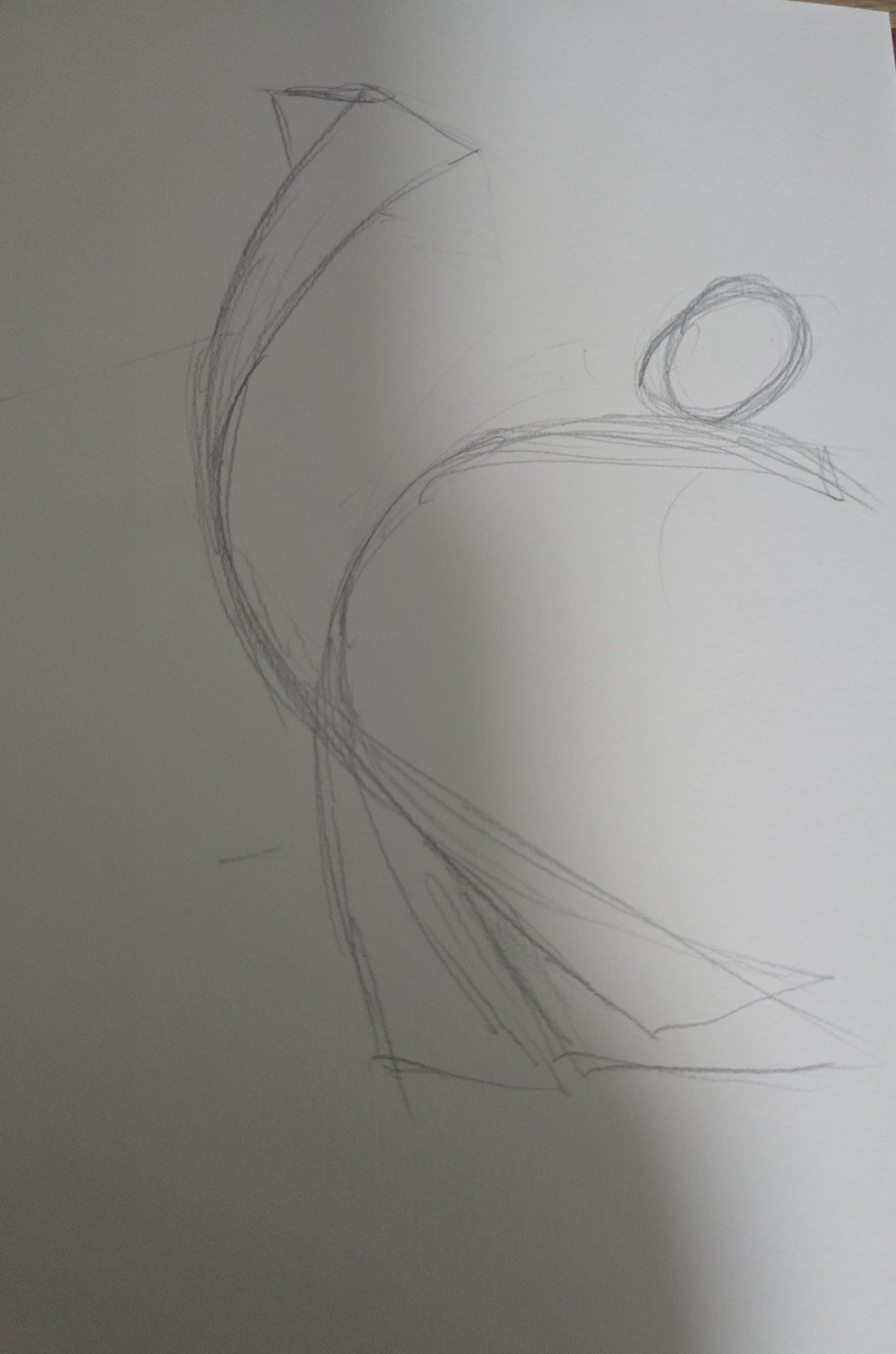
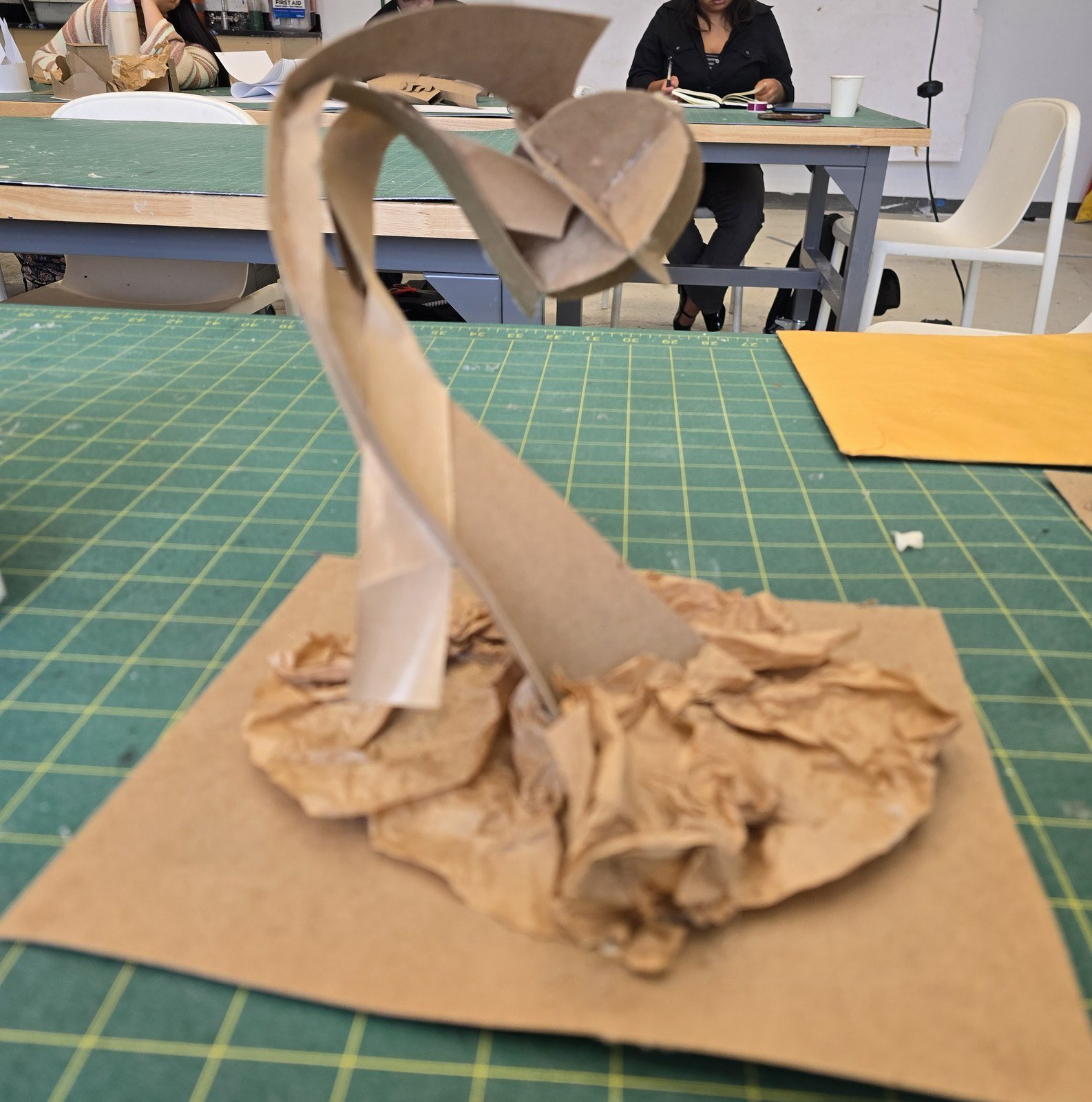
My first study focused on the feeling of imbalance and tension in anxiety as well as translation from 2D to 3D. Anxiety often leaves me feeling restless and constantly on edge, so I reflected this by designing an asymmetrical sculpture with uneven visual weight. The lower section was made of thin cutting paper and curved. Then, a large spherical form was attached on the edge of the top in the piece of paper. A slightly touched connection between the curved paper and the spherical form was my intention to create a round object that could fall at any moment – if I were to consider the sphere as my head and the remainder as my limbs, it would be as if my body were contorting in order to separate the two.
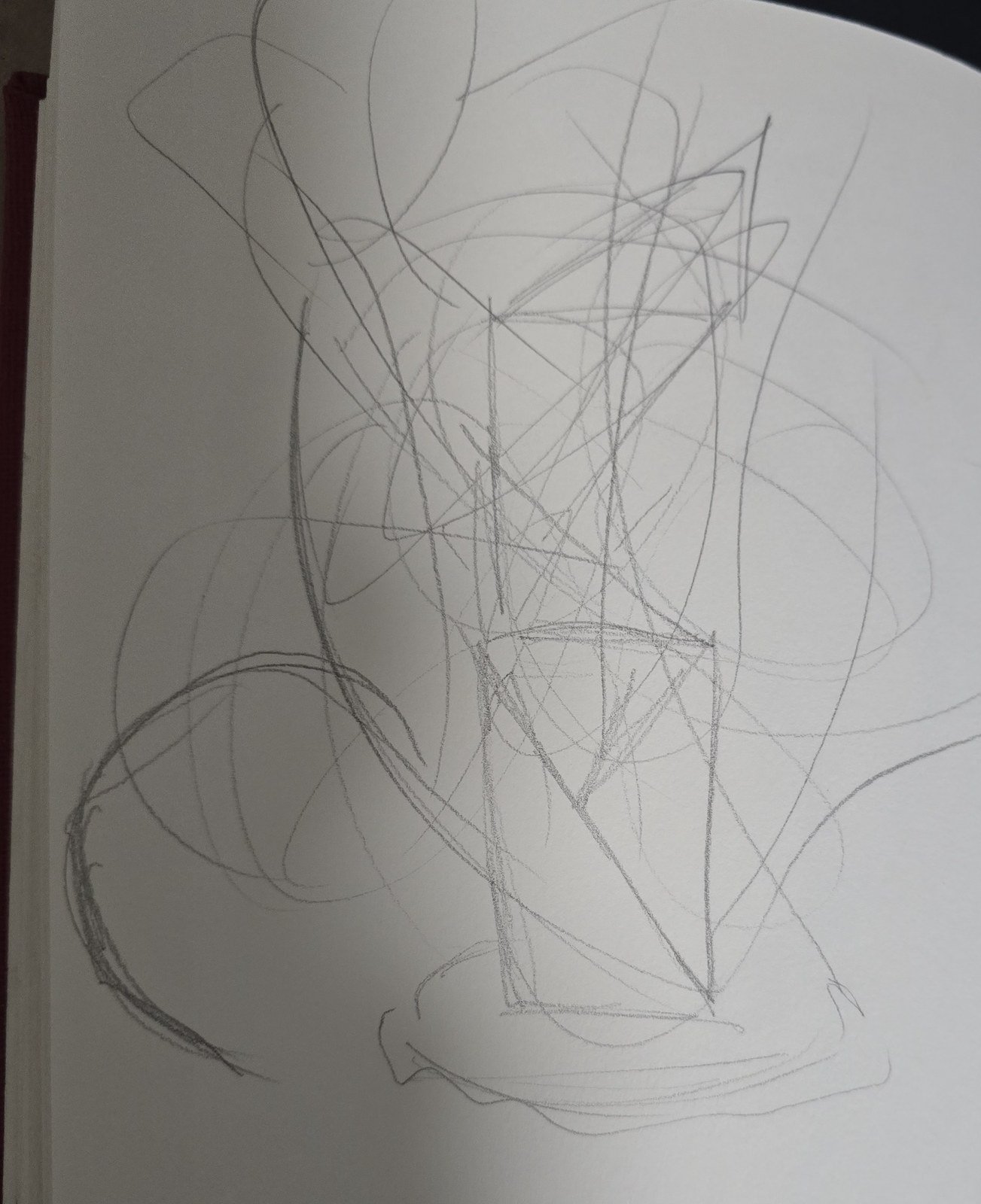
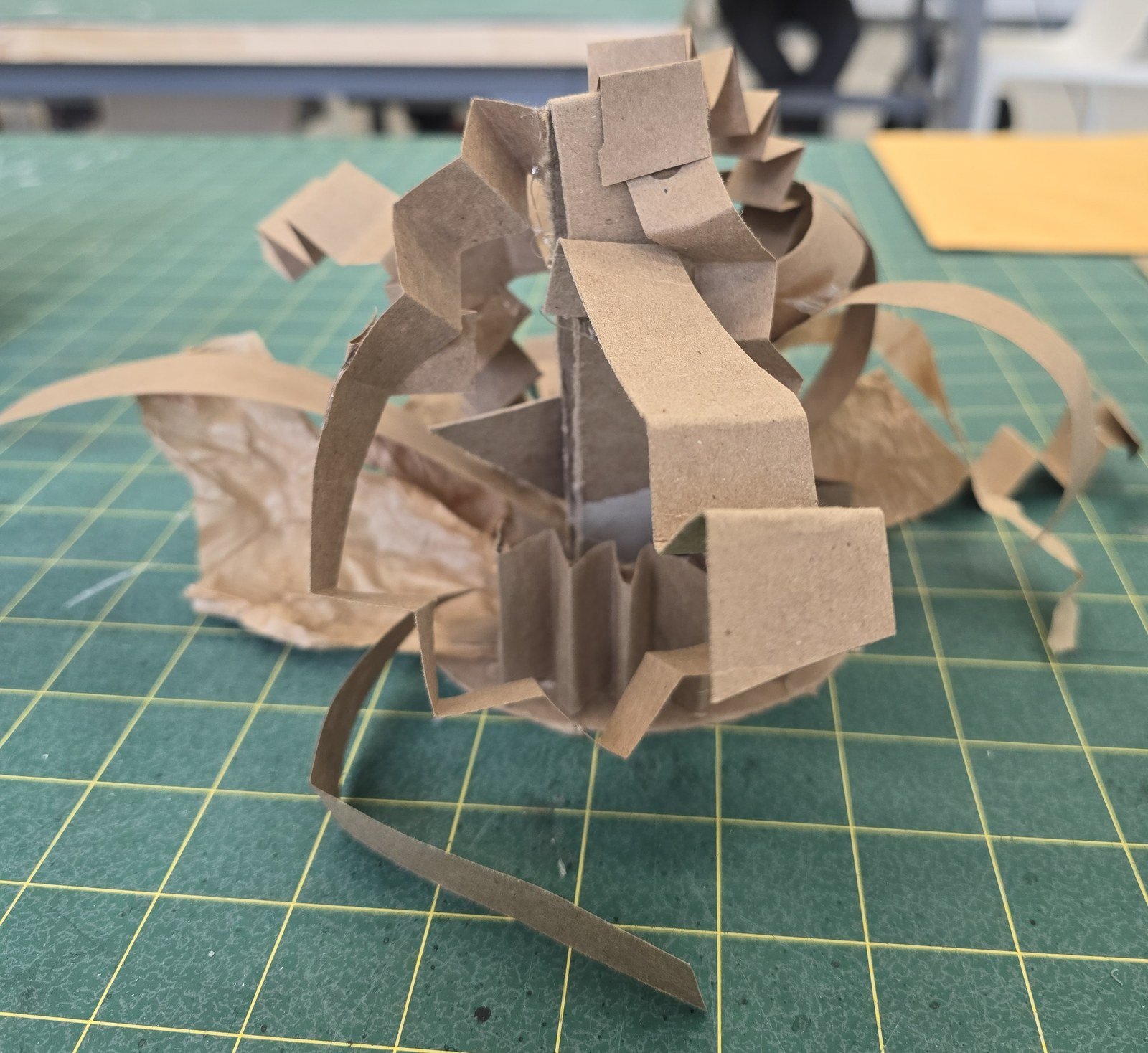
My second paper study is about the physical discomfort that anxiety provokes. When I feel anxious, the gurgling and swelling bubbles of hurt and instability roll up my spine, so much that a random organ – heart, brain, or stomach – is building pressure and any one of them is about to burst. Therefore, I designed the structure's center with a crumpled and folded shape and some pieces of narrow paper placed toward outward as if to simulate an explosion. I wanted to highlight the intense internal pressure and uneasiness caused by anxiety.
Both experiments with paper expanded with different designs and ideas for my bigger sculpture.
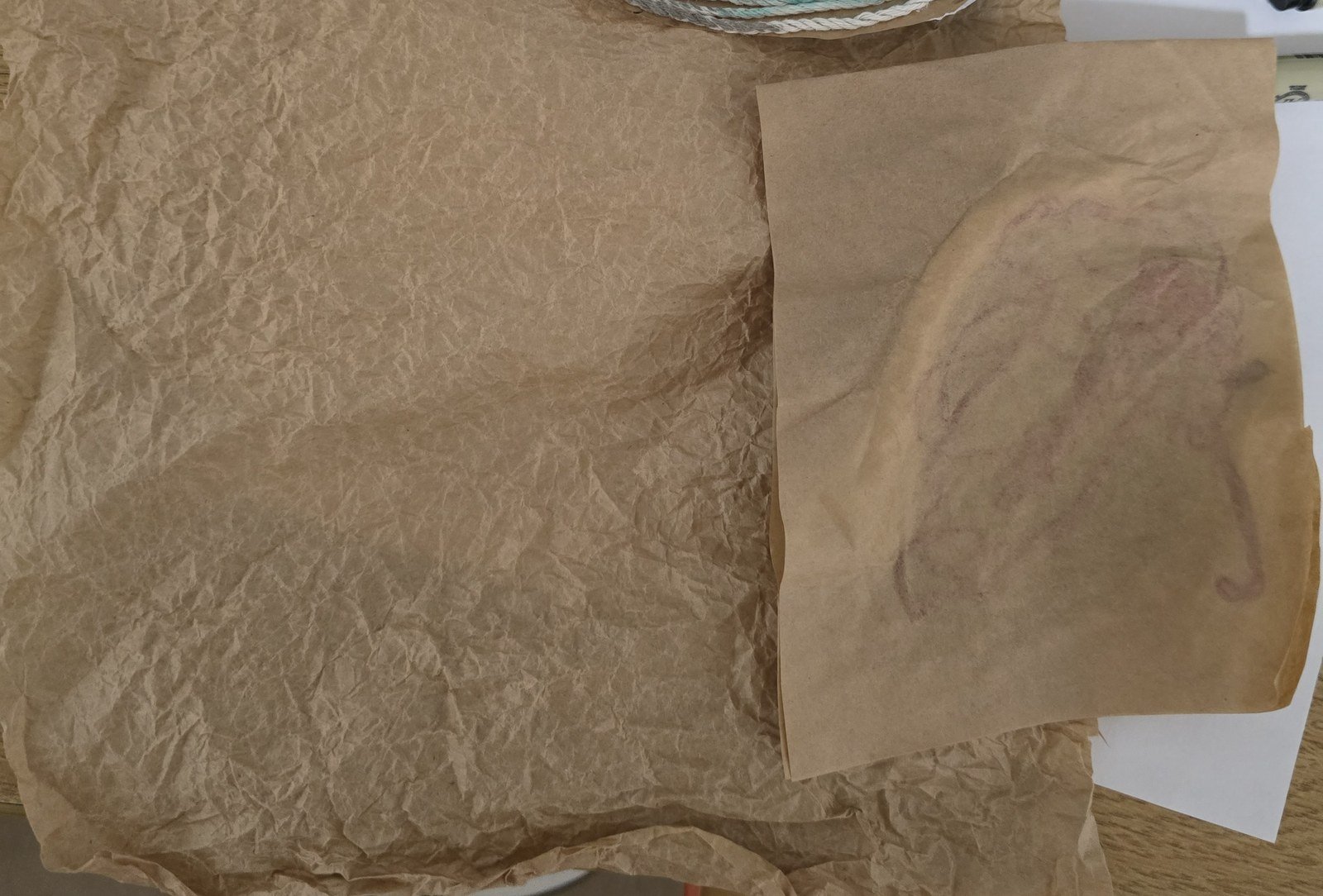
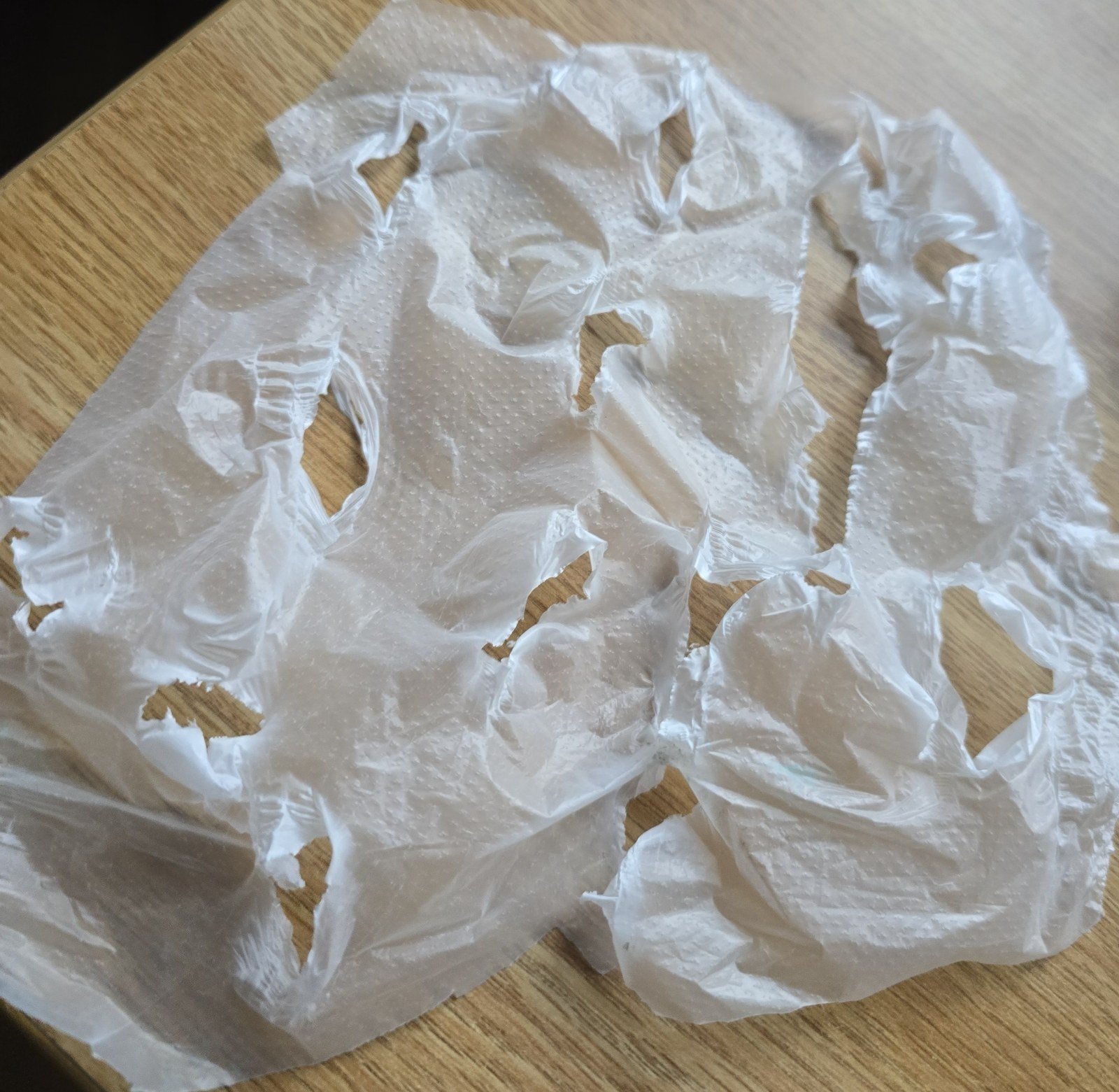
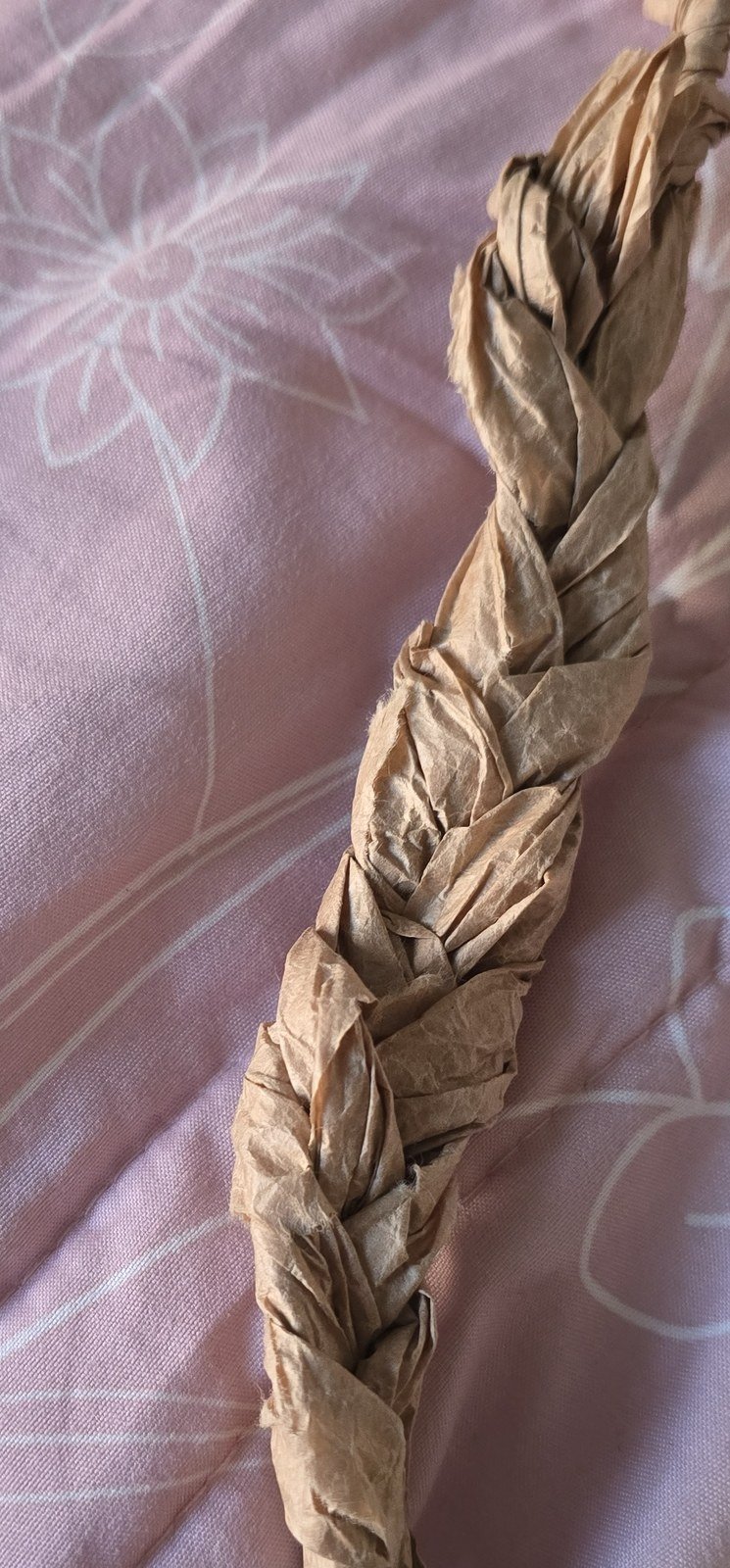
Furthermore, I trialled various materials like tissue paper and plastic wrap to check if those materials are able to convey the layers of anxiety. The preparation of the tissue paper was a sort of biomimicry, as I would crumple and unfold it repeatedly to create random lines as texture, similar to how skin looks up close. Meanwhile, tearing the plastic wrap as a way to convey wounded human skin a la constant fingernail abrasion with hidden wire beneath the paper delivered the state of emaciation to the point of skeletonization of the subject. Mixed materials with the unevenly braided paper were a separate experiment to symbolize uneasy and tangled emotions.
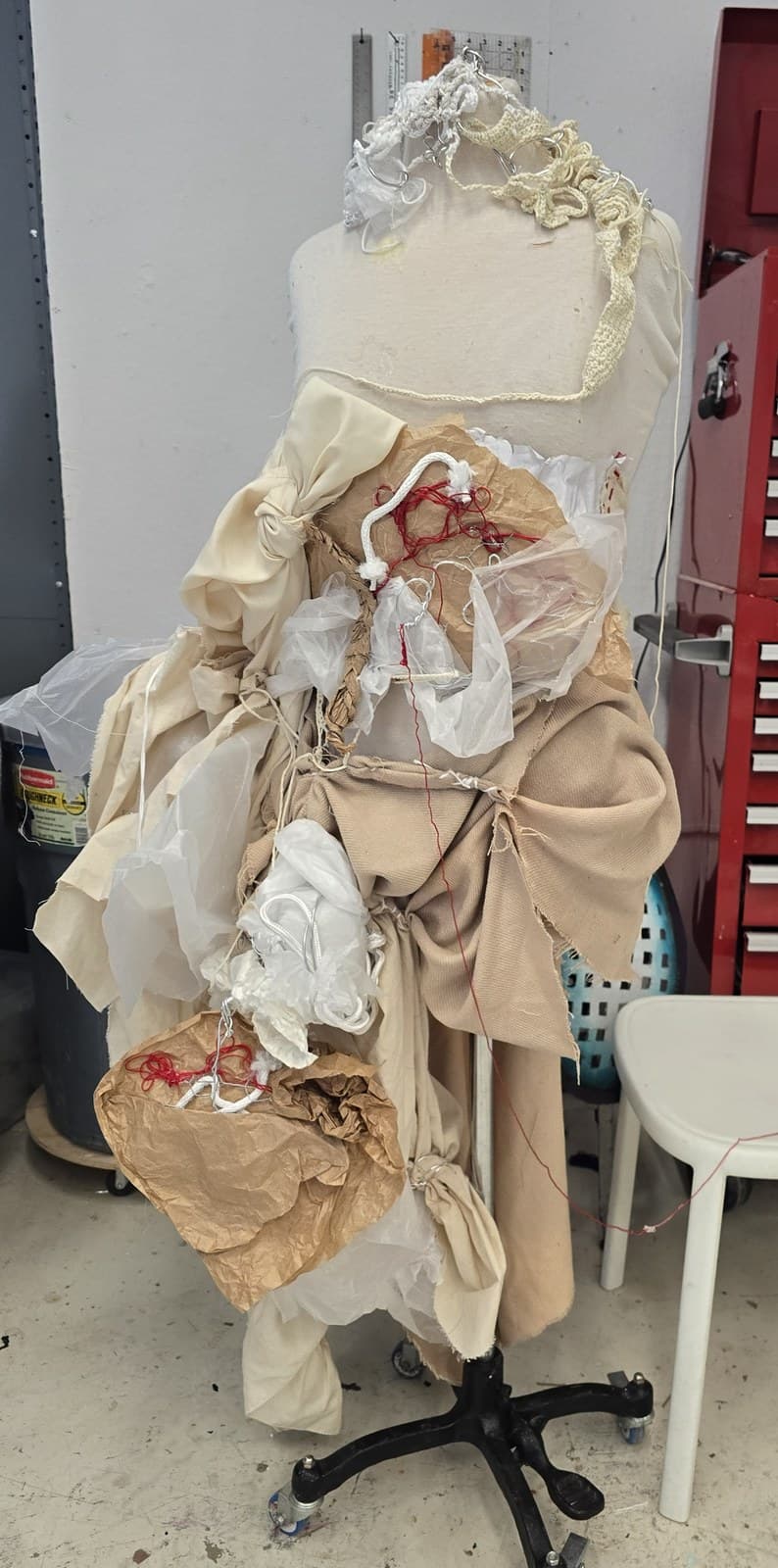
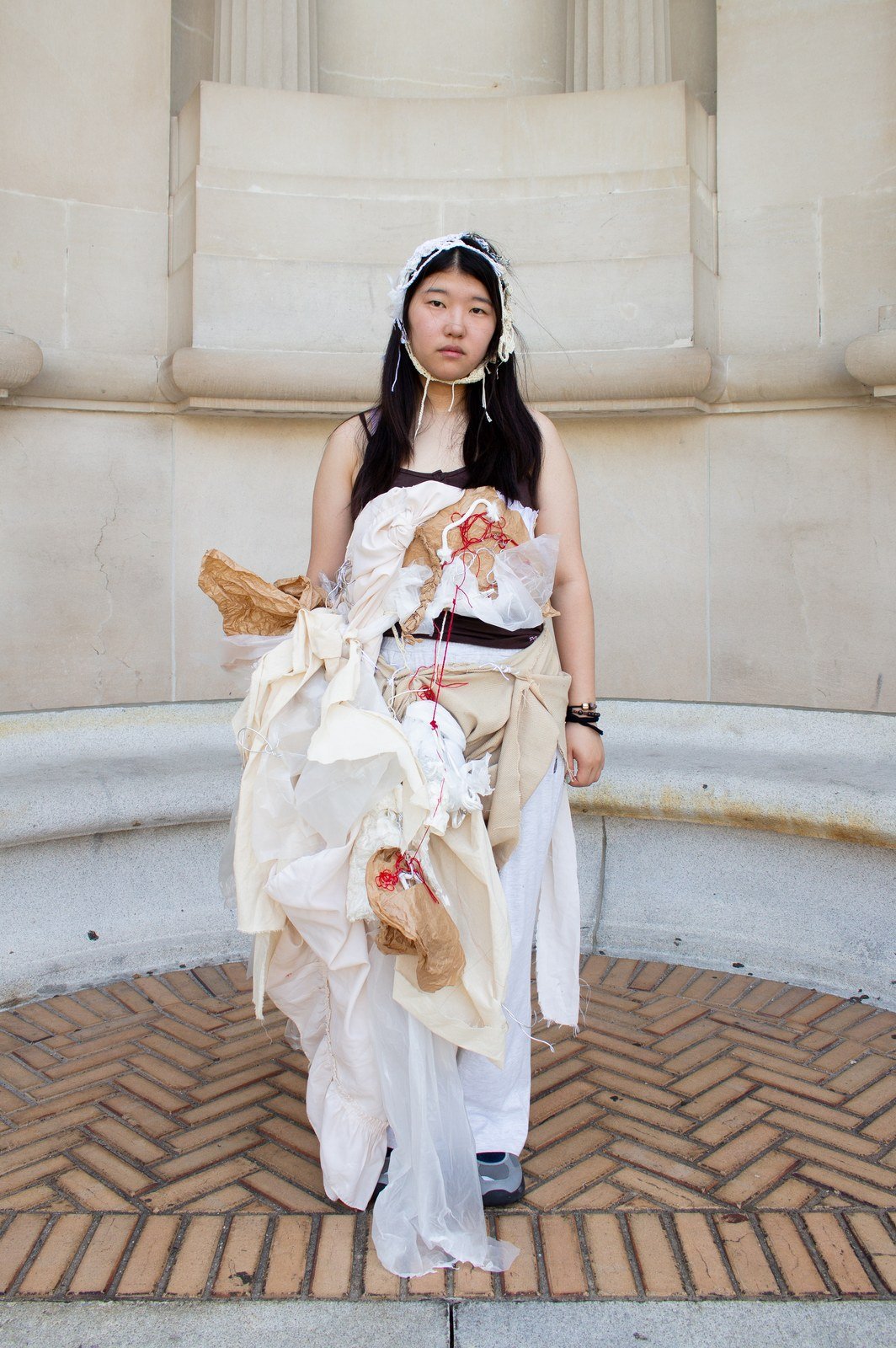
After this series of sketches and paper studies, I began constructing a wearable sculpture that extends from head to toe. For the wearable sculpture, I decided on amalgamating fabric, wire, crochet, paper, and plastic wrap because each material contributes a different texture and structural quality to address the complex multifaceted nature of anxiety.
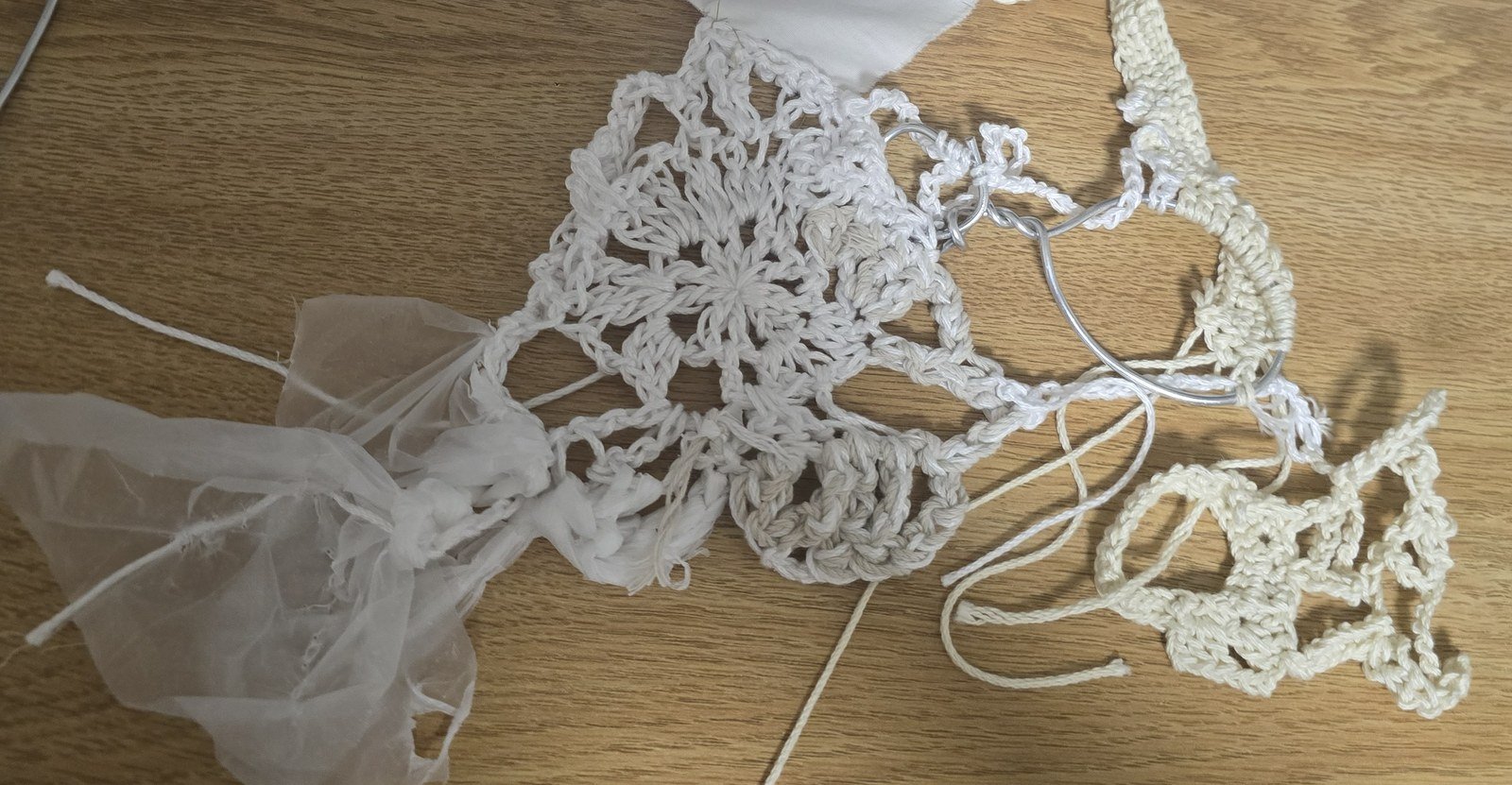
I first designed and crocheted the headdress using wire strips and yarn. The intertwined crochet lines resembled tangled thoughts, and the structure wraps around my face to represent headache and stress that often comes with anxiety.
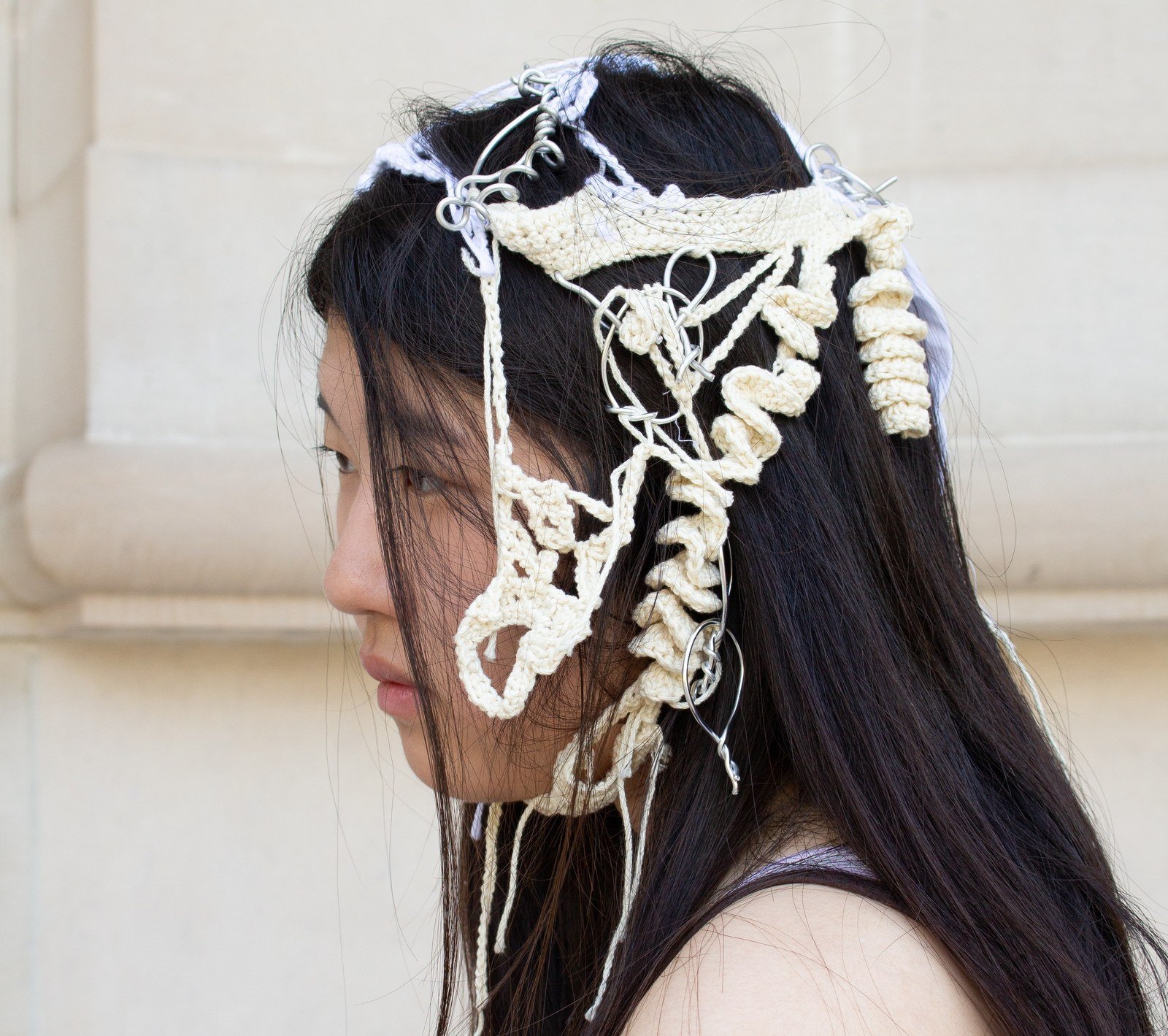
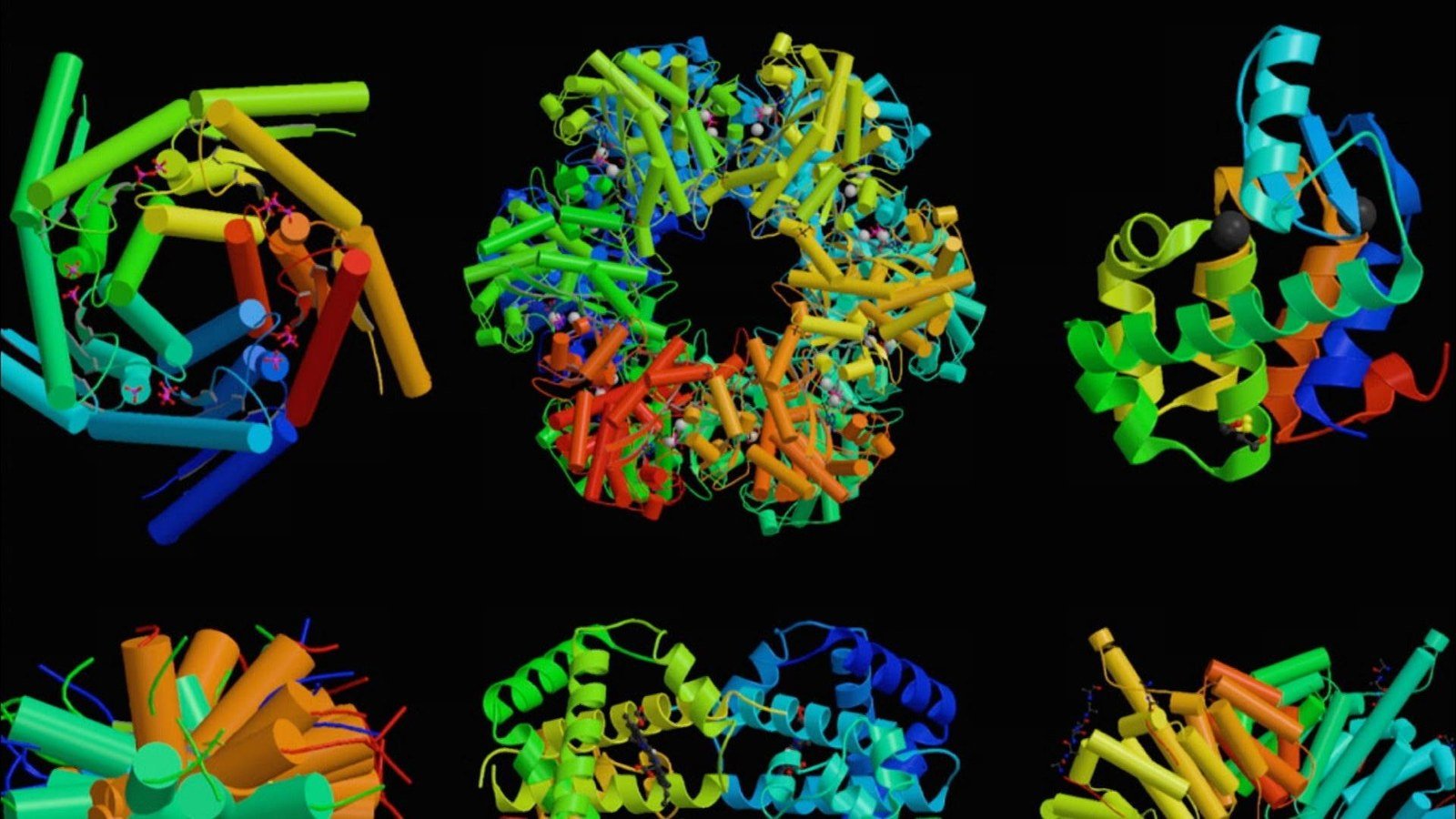
For myself, I thought about what moment was the most anxious time during my life, and the 2019 coronavirus outbreak came to mind. During that period, I think a lot of the world population experienced confusion, hysteria, distrust and oftentimes overthought situations when they had simple answers. This headdress is first meant to show the garbled nature of our brains when we overanalyze, but it also serves as an homage to the Fold-It research project / game that hosted a challenge on modelling proteins to combat CoViD-19, which I viewed as a useful crossroads between art and science. For this reason, this is probably the part of the sculpture dress I am most proud of.
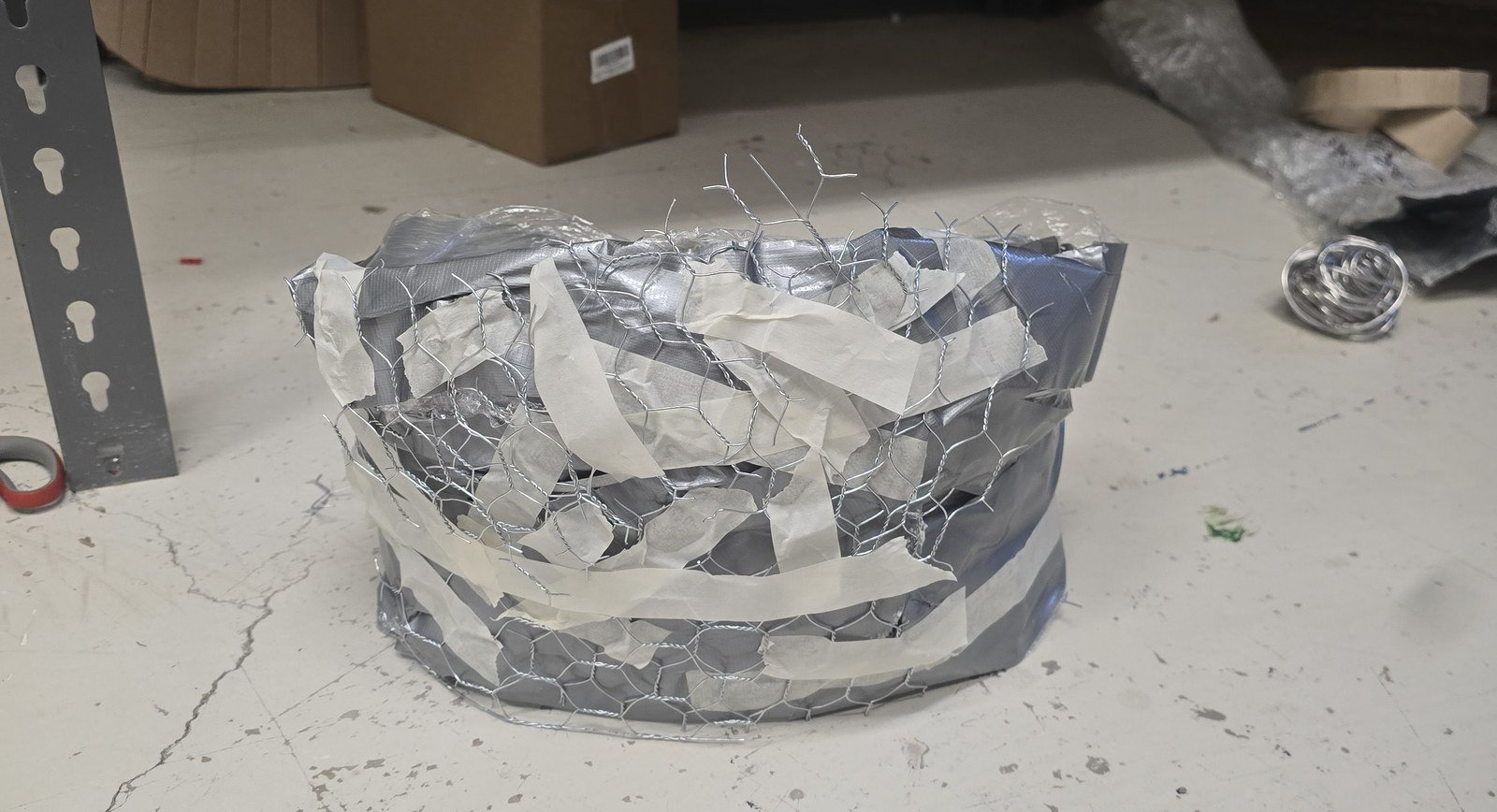
At the same time, I made a structure for a corset part of the dress, using plastic wrap and duct tape. For better stability, I cut some chicken wire and stitched them around the corset. On the duct tape structure, I utilized a papier-mâché technique for the half of the structure in three layers. For the back of the body part, I sewed fabric and ribbons for adjustability and breathability.
When the corset was finished, I used corset needles to make a connection with the skirt which was composed of the aforementioned fabric, crumpled paper, and plastic sheet elements. To address the unbalanced feeling of anxiety, as I mentioned at the beginning stage for the conceptual development, the skirt has asymmetrical design and unbalanced weight on one side.
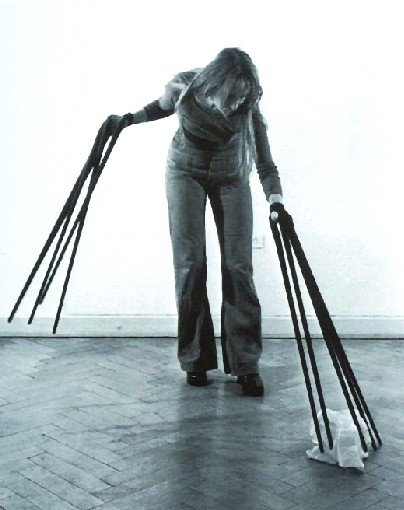
Even though my sculpture is mainly made out of soft materials, I wanted the anxiety to give a sense of inflation as time went on. So I inserted more fabric and leftover paper under the skirt for volume. Although it's not a 1-to-1 match with my piece, my mind evoked Rebecca Horn's "Finger Gloves" (1973) since it also used cloth extensions as a way to fill space and project the concept of self from a longer distance.
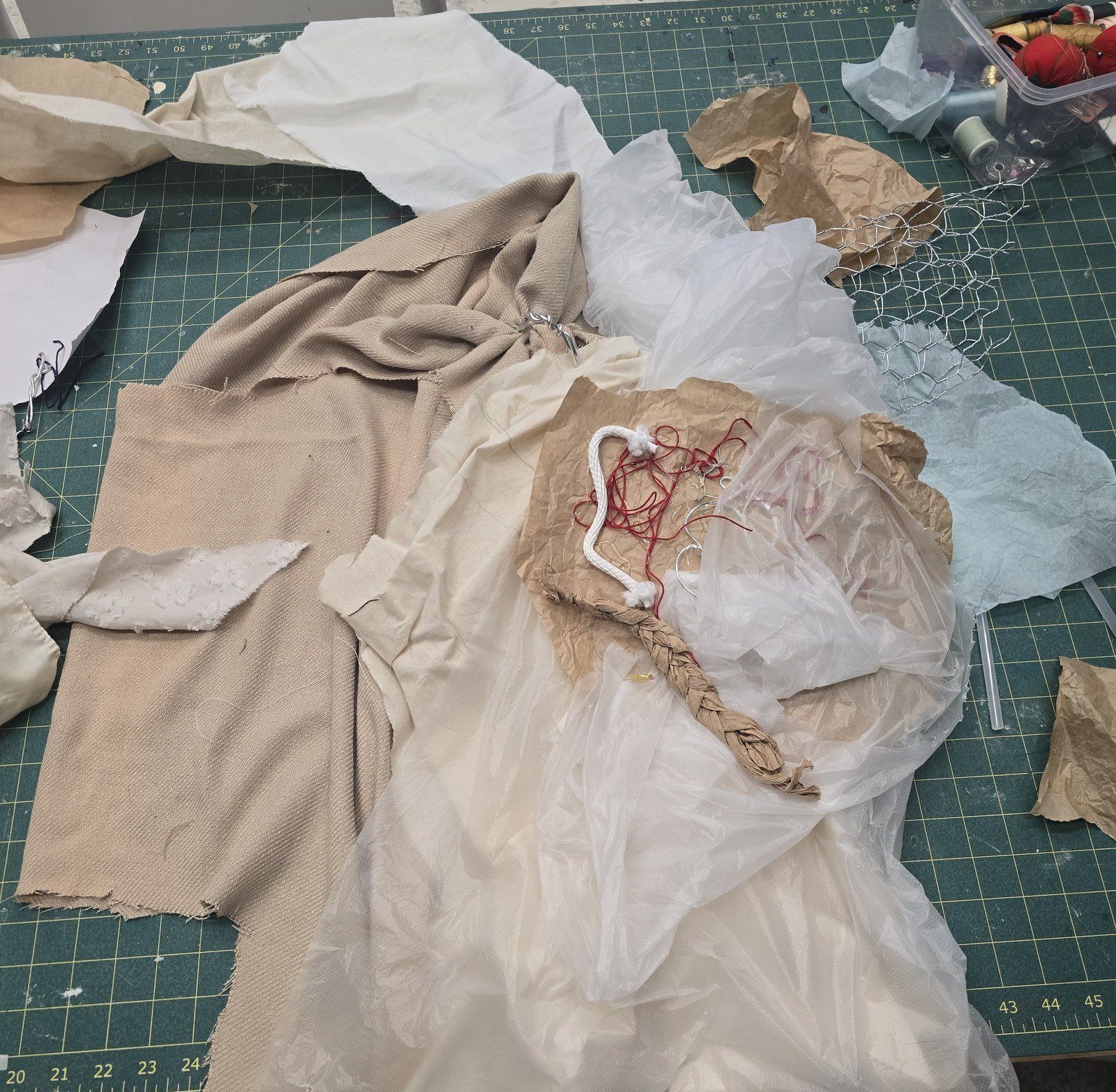
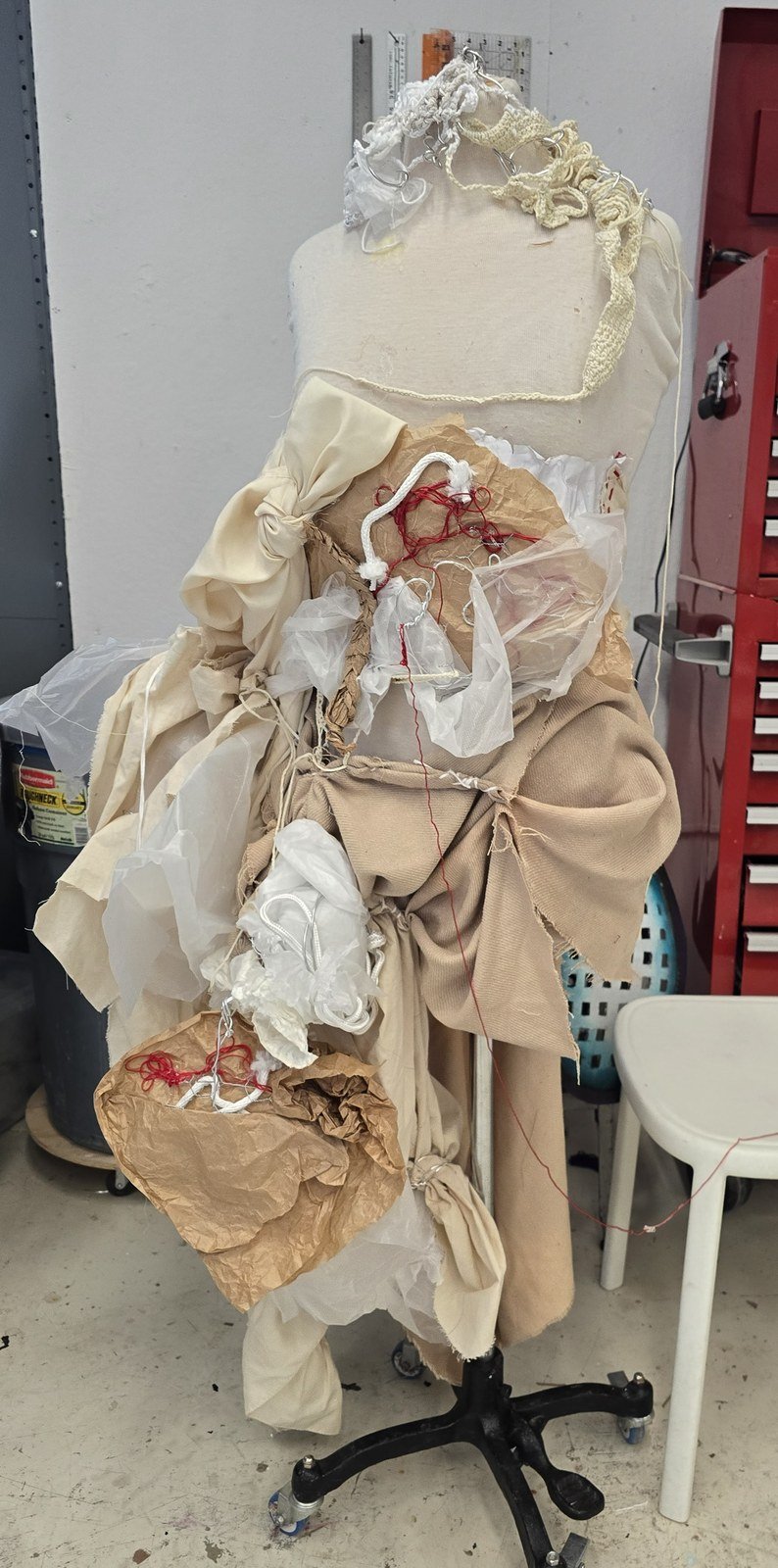
To express uncertainty as the root cause of anxiety, I made several patches with mixed materials, stuck onto the front of the corset and skirt. I further represented discomfort through red string coiled near the heart region and flowing downward, to signify both a symptom – a "sinking feeling" – and long-term effect – a bleeding heart.
This is the finished result (and me wearing it):
Needless to say, like with all experiments, this is just a prototype. If I were to improve on this wearable sculpture, I would make several improvements to the corset. Because the skirt was constructed with multiple layers of fabric, its weight stressed too much on the paper mache corset, causing it to tear slightly while I was wearing it. In addition, the corset fitted more loose than I intended because the duct tape mold included several extra layers and made it larger than my actual chest and waist measurements. To improve both the durability and fit of the sculpture, I would construct the corset with stronger base material such as cardboard and additional paper mache on the inside of the corset. These changes might give better support of the skirt and comfortable fit.